
Stronger parts.
Conductive prints.
Same printer.
We put graphene, one of the strongest and most conductive materials on Earth, into filament that prints like PLA. Make parts that take real load, or carry a signal, on the FDM printer you already own.
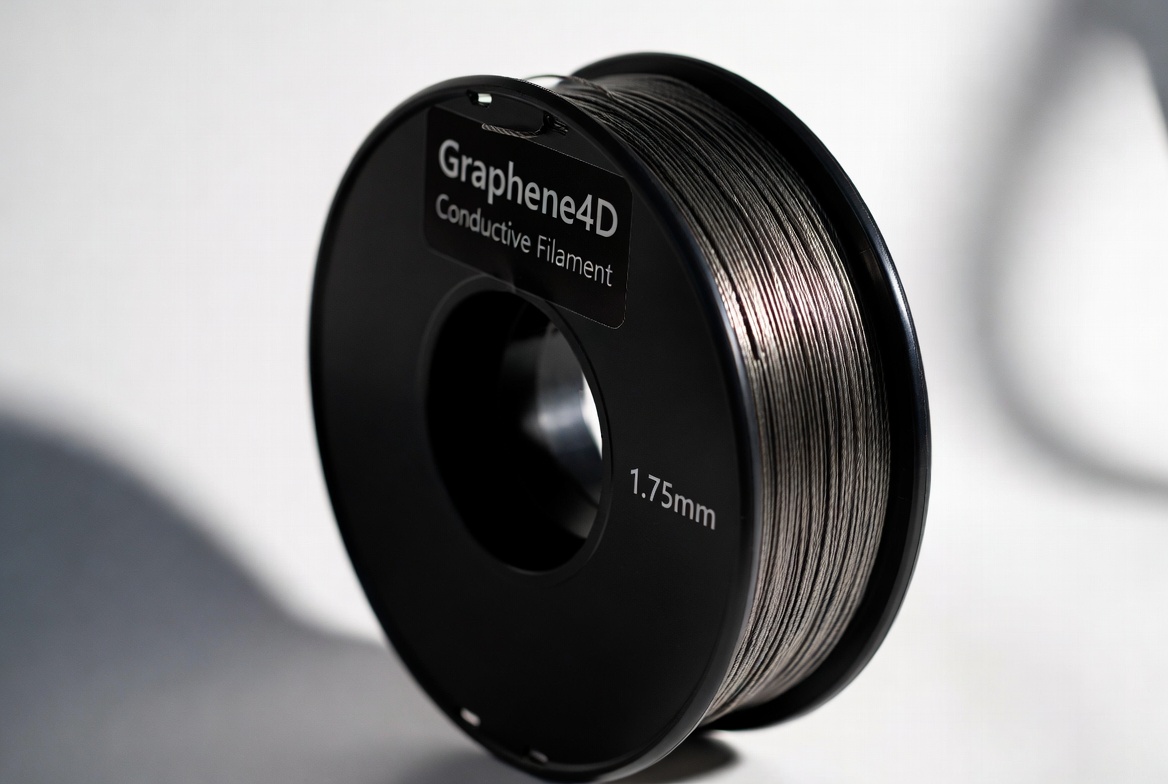
Two materials. Each built for one job.
Shop all filaments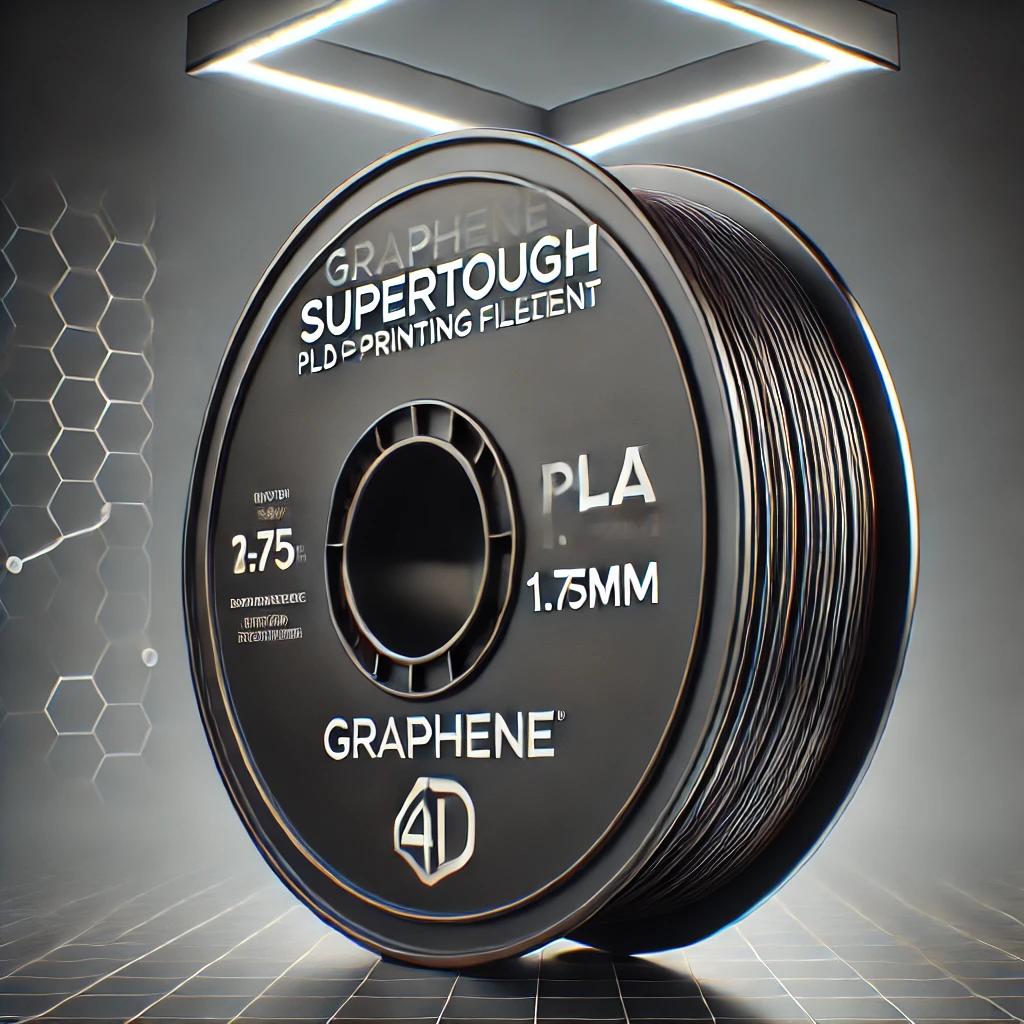
SuperTough PLA
Prints like the PLA you know, with the stiffness and layer bonding for parts that actually get used: brackets, jigs, clips and housings.

Conductive Filament
Print touch pads, sensors, traces and static-safe parts directly. No separate wiring, no extra circuit board.
Best sellers

Which filament do I need?
Start with what the part has to do.
It has to take load
Brackets, mounts, clips, tool holders: anything that gets bent, dropped or tightened.
SuperTough PLA →02It has to carry a signal
Touch buttons, sensors, conductive traces, ESD-safe trays and fixtures for electronics.
Conductive Filament →03Not sure yet
Tell us what you’re making and we’ll recommend a material and settings.
Ask us →What people print with it
Printed pads a microcontroller can sense, built straight into a case or panel.
Read the project →ESD-safe trays & jigsStatic-safe parts for handling circuit boards and sensitive components.
Conductive vs dissipative →Functional, load-bearing partsParts that get used, not just displayed.
Strongest filament guide →Parts near heatChoosing a filament for anywhere warm.
Heat-resistant guide →Guides
All guidesQuestions, answered
Will it work on my printer?
Yes, if it’s a standard FDM/FFF printer. Every filament comes in 1.75mm and 2.85mm, and prints at PLA-like temperatures.
How quickly will my order arrive?
Everything ships from UK stock and is dispatched within 24 working hours. UK delivery is free on orders over £200.
What if it isn’t right for my project?
You’re covered by our 30-day money-back guarantee.
Can I spread the cost?
Yes. Split your purchase into interest-free payments with Klarna at checkout.
Print parts that do more.
UK stock, dispatched within 24 working hours. 30-day money-back guarantee.